Ravi credits Rahul's SEO teaching and continued guidance with helping him begin his digital marketing career.
See the learning in actionOne brief.
One brief.
A way to learn.
Imagine a local bakery that wants enquiries for custom cakes. How can the right customer find it, understand the offer and get in touch?
1
Skills.
Understand the customer, the offer and the action you want them to take.







2
Practice.
Create a first version: a page outline, content plan or campaign brief.








3
Direction.
Explain your choices. Review the work. Decide what to improve next.








Three directions. Seven courses.Choose a focus.
Choose a focus.
See where it leads.
Start broad or develop a particular skill. Every course has its own scope; the summaries below help you compare.

Understand the foundations
Begin with the decisions behind a marketing plan.

Build a marketing specialism
Focus on search, social content or paid campaigns.

Create websites & AI workflows
Develop a site or a more useful way of working.
Want more detail? Open a course below to explore the topics and a possible practice task.
Digital Marketer Certification (MDMI)
A foundation in customer research, marketing strategy, content and measurement before choosing a deeper specialist focus.
Explore topics, suitability and a sample project for Digital Marketer Certification (MDMI)
Choose this starting point if you are beginning a marketing career, changing fields or trying to give your business activity a clearer direction. The course helps connect those strengths with the decisions behind a digital marketing plan.
The scope is Digital Marketing Strategy & Introduction. Explore core concepts, strategy frameworks, customer research, market analysis, content creation and introductory AI content tools. Assess both individual activities and the wider business environment. MDMI’s dedicated SEO, social media, website, performance marketing and advanced AI programmes remain separate courses with their own depth.
Measurement gives the plan a way to improve. The outline includes tracking traffic sources, reviewing campaign performance, understanding user behaviour, calculating return on investment and adjusting strategy. Google Trends, Ahrefs Backlink Checker, Google Ads and Google Analytics are named alongside the course. Each makes more sense when connected with a specific research or measurement question.
For the bakery example, begin with people ordering custom cakes for an occasion. What do they need to know before enquiring? Turn that research into an audience brief, a content idea and a plan for measuring useful enquiries. If you use sample figures in a report, label them clearly and explain what further information you would need.
This foundation can help you explore work associated with a Digital Marketing Executive, Analyst, Strategist or Freelance Digital Strategist role. Responsibilities and entry requirements differ, so use those titles to investigate actual tasks. Compare a few job descriptions with the work you enjoy, then discuss the current syllabus and your next learning step with MDMI.
A to Z Social Media Marketing
Plan content, manage conversations and review the response across the social channels that suit your audience.
Explore topics, suitability and a sample project for A to Z Social Media Marketing
This course is for people who want to understand the work behind a social account: aspiring managers, creators, freelancers and owners planning their own content. It suits a goal such as making a brand’s communication more consistent or turning scattered post ideas into a manageable publishing plan with a clear purpose.
The course outline covers Instagram, Facebook, LinkedIn and X. Explore audience targeting, content creation, scheduling and campaigns, including the role of paid promotion. Give each platform a reason to be in the plan.
A calendar is useful when it tells the person creating a post what to make and why. Connect a content theme with its audience, message, format and next action. Include space for review and preparation, rather than filling every date with an idea that nobody has time to produce. A small, considered plan is easier to evaluate.
For a bakery, content might answer ordering questions, explain flavour choices or show how to prepare an enquiry. These are illustrative themes, not a claim about an existing client. Think through the comments and messages they could generate: what can you answer, what needs checking, and when should a request go to the business owner?
When reviewing the response, connect the numbers with the original purpose. A saved explanation, a relevant question and a website visit can each tell you something different. Record your observations and propose a change for the next cycle. If your main interest is advertising budgets and ecommerce sales journeys, compare the separate Performance Marketing pathway before deciding.
Search Engine Optimization (SEO)
Research how people search, review the pages they find and turn an SEO audit into a useful action plan.
Explore topics, suitability and a sample project for Search Engine Optimization (SEO)
Choose SEO if you enjoy research, writing, website analysis and working through problems patiently. It can suit an aspiring specialist, a content marketer or an owner responsible for a website. The central question is what someone needs when they search, and whether the page they reach gives them a useful answer.
MDMI’s outline includes on-page, off-page, technical, local, ecommerce, mobile and international SEO, alongside keyword research. These areas overlap, but their importance depends on the site. Learn to identify the relevant issue before recommending a familiar tactic.
For the bakery example, separate searches about custom cakes in a location from questions about sizes, flavours or ordering lead times. Map related needs to an appropriate page rather than creating a separate page for every phrase. Review titles, headings, content and internal links together, so the visitor can move from an initial question towards an informed enquiry.
An audit should make the next action easier to choose. Describe the issue, show an example, explain its likely effect and identify any dependency. A missing explanation may need a writer; a crawling or performance problem may need development help. Prioritise a small set of meaningful changes instead of giving every finding the same urgency.
Review search and analytics information to see what changed and what still needs investigation. Keep a record of dates, work completed and other factors that could affect the result. If building the website itself appeals more than diagnosing its search presence, compare the WordPress course. The SEO ebook is also a useful first exercise before a course discussion.
Advanced WordPress Website Design & Development
Plan and build a WordPress website that helps visitors find information, understand an offer and send an enquiry.
Explore topics, suitability and a sample project for Advanced WordPress Website Design & Development
This pathway suits aspiring website builders, marketers, freelancers and owners who want to create and maintain a business site. Start with the job the site should do. For a service business, that may be helping someone compare options and submit a useful enquiry.
The outline follows the work from sitemap to launch preparation. Explore WordPress pages, posts, themes and plugins; organise content into readable layouts; and develop reusable sections that work across screen sizes. Understand how a domain, hosting and a local practice environment fit together. Discuss your current experience with MDMI when assessing this advanced pathway.
For the bakery example, map a short route from the homepage to custom-cake information and an enquiry form. Decide which details belong on the page and which belong in the form. Visitors may need examples, ordering information and contact details before they feel ready to ask. Put those needs ahead of adding more visual effects.
A finished page needs practical checks as well as a visual review. Test navigation and links, read long headings on a phone, inspect image crops and use the form with both valid and incomplete entries. Consider keyboard access, contrast and descriptive image text. Check that a successful submission gives a clear confirmation and reaches the intended destination.
The handover is part of the work: explain how to edit a page, replace an image and follow an agreed backup and update routine. Confirm which builder, plugins and account levels are used in your batch before buying anything. If your main goal is improving a Shopify store and its advertising journey, compare the ecommerce pathway instead.
Performance Marketing + Ecommerce Marketing & Shopify Optimization
Connect paid campaigns with a clear shopping experience, then use the evidence to decide what to improve next.
Explore topics, suitability and a sample project for Performance Marketing + Ecommerce Marketing & Shopify Optimization
Choose this path when paid advertising or ecommerce improvement is central to the work you want to do. It can suit marketers, store teams, freelancers and owners who need to connect campaign decisions with what happens after a click. A useful plan considers the offer, audience, creative and destination as parts of one journey.
The performance marketing outline covers search, display, shopping and remarketing, with targeting, bidding, copy and measurement. Begin with a clear objective and a definition of a meaningful action. That choice affects how you organise the campaign, discuss a budget and read its report. A high volume of visits alone does not explain whether the journey is working.
The ecommerce portion covers foundations, the Shopify homepage, store SEO, product pages and conversion improvements. Look at what a shopper needs to understand: the product, the relevant options and the next step. Missing or confusing information can interrupt the journey even when the advertisement attracts an appropriate audience. Review the destination alongside the campaign brief.
For a sample bakery selling a packaged gift box, outline an advertisement and the product page it should lead to. Make the message consistent, then choose one improvement to investigate. Describe your expectation and the evidence that would help assess it. Label the exercise as a sample, distinguishing expected results from measured sales.
Before working in live accounts, confirm access, ownership and any practice budget with MDMI. Advertising spend, store plans and subscriptions need their own discussion. If you are still learning the fundamentals of research and strategy, the certification may be a better first conversation. If your interest is primarily organic content and community, compare Social Media Marketing.
AI Career Kickstarter Course
Use AI for familiar tasks, improve your instructions and learn to review the work before relying on it.
Explore topics, suitability and a sample project for AI Career Kickstarter Course
This introductory course suits students, career starters and professionals who want a practical starting point for using AI. Begin with work you recognise, such as organising research notes or preparing a short explanation. Familiarity with the subject helps you judge whether the result is accurate, useful and appropriate for the person receiving it.
The outline connects AI foundations with prompting, research organisation, writing, creative briefs, presentations and simple assistants. A useful instruction names the task, audience, relevant context and output format. Examples and constraints can make the request clearer. When the first result misses the point, identify what is missing and revise the instruction rather than accepting the draft.
For the bakery example, use supplied sample notes to draft an answer to a common ordering question. Check whether the answer introduces a price, service or promise that the notes never established. Refine the instructions so missing information is flagged for a person to answer. The improvement is in the process and review, not just in producing fluent text.
A small assistant or reusable workflow can start with one narrow responsibility. Define what it needs as input, what it should produce and when a person must take over. Try several examples, including incomplete ones, and record where it fails. This makes the exercise more useful than saving a single successful response without knowing its limits.
Keep a portfolio note showing the original task, the instructions, the first result and your corrections. AI literacy can complement work you already understand. It is a starting point for using tools and building simple workflows; specialist AI engineering and machine learning roles require additional technical learning and experience.
Advanced AI Course for Business Owners
Choose one recurring business task, test a manageable AI workflow and make its responsibilities clear to the team.
Explore topics, suitability and a sample project for Advanced AI Course for Business Owners
This advanced pathway is for owners, founders and team leaders who want to approach AI through a business need. Start with recurring work that takes effort or produces inconsistent drafts. Describe the current process before choosing a tool: who does the work, what information they use and what a useful finished result looks like.
The outline covers opportunity mapping, approved business knowledge, reusable instructions, marketing and customer workflows, internal assistants and automation planning. It also considers quality, access and team adoption. The focus moves from individual prompts to a process others can understand, review and use consistently.
For the bakery example, a team might explore an internal aid for preparing replies from approved ordering information. The pilot could draft an answer for a person to check, while referring missing details to the owner. Begin with sample data and a narrow set of questions. This is an illustrative workflow, not a ready-made integration or promised business outcome.
Evaluate the pilot against the existing way of working. Include time spent checking and correcting answers, not only the time taken to generate them. Ask the people using it which steps helped, which created confusion and where they needed to intervene. Keep examples of weak results so the next revision addresses a real problem.
A useful handover identifies the workflow owner, the reference material, the review rules and the situations that need human attention. Decide how changes to business information will reach the tool. If you are still learning everyday AI use, compare Career Kickstarter first; if you already have a process in mind, bring that outline to your enquiry.

Meet your guideRahul Barot
Rahul Barot
Founder
MDMI - Digital Marketing Institute in Ahmedabad
Rahul Barot brings over eight years of experience in SEO teaching and consulting, with more than 100 SEO clients worldwide. At MDMI, his practical teaching approach helps learners understand the work and build confidence in their skills.
No. 1 Digital Marketing Course in Ahmedabad, Situated at heart of Ahmedabad near Gujarat University Naranpura. Our Advance Digital marketing course is designed to equip you with in demand Digital Marketing skills. MDMI Digital Marketing Training Institute offer you comprehensive training in SEO, PPC, Social Media Marketing, & Digital Marketing. Move Digital Marketing Institute brings this practical approach to digital marketing, website and AI learning in Ahmedabad. The aim is to connect the topic you are studying with work you can understand and explain.
Meet Rahul & MDMIWhat to discuss with your learning guide
Bring a question about the kind of work you want to do. It could be understanding a marketing plan, improving a website or exploring a particular AI workflow. Describe what you have tried and where you get stuck. That context makes it easier to discuss an appropriate starting point.
You can also bring a sample piece of work to your course conversation. Ask which topics would help you develop it further and what the current programme expects from learners. The About page introduces the institute and its approach; the course pages explain the individual pathways.
-
 View certificate
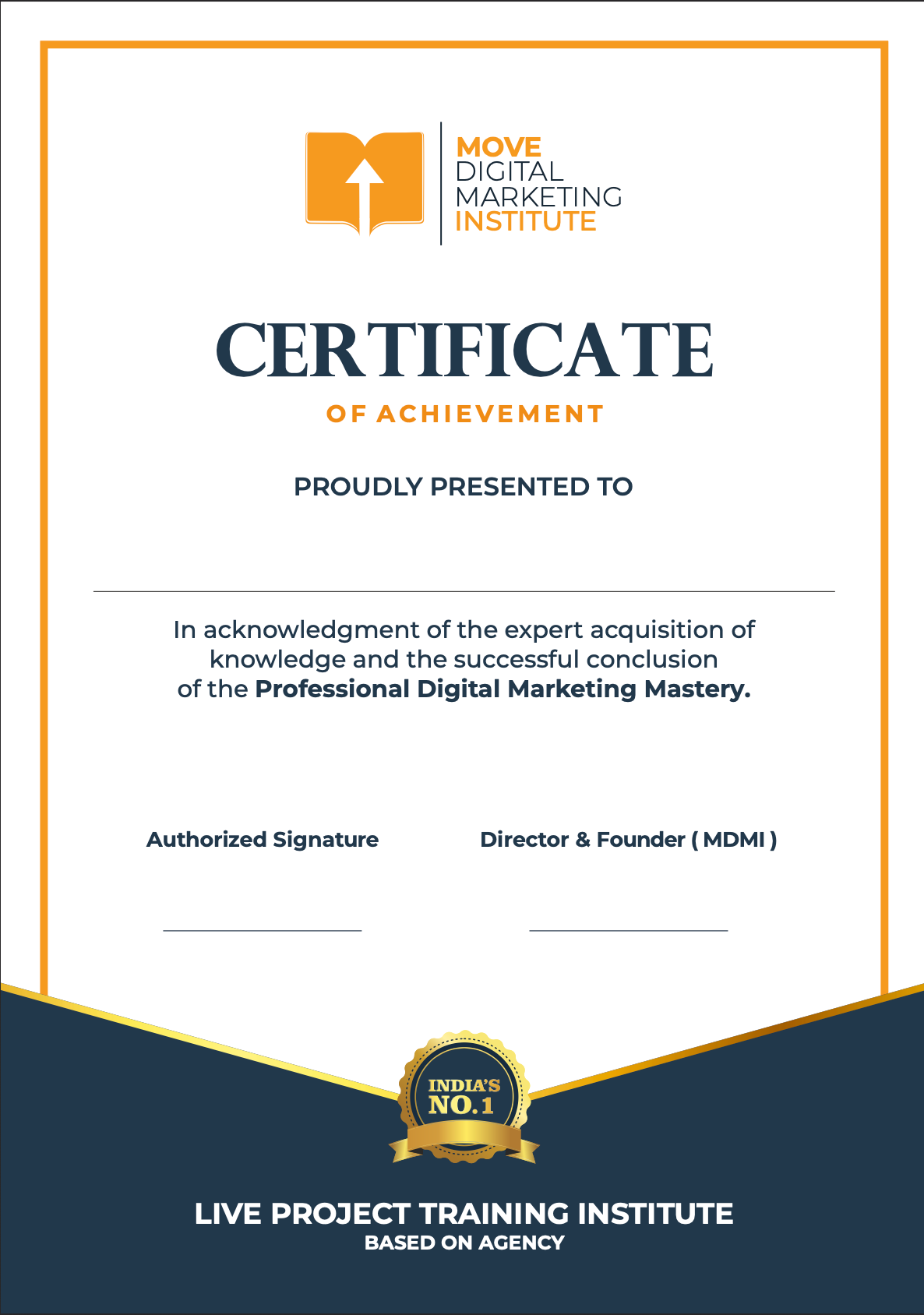
Professional Digital Marketing Mastery -
 View certificate
Certified Specialist in Search Engine Optimization -
 View certificate
Certified Google Ads & SEM Practitioner -
 View certificate
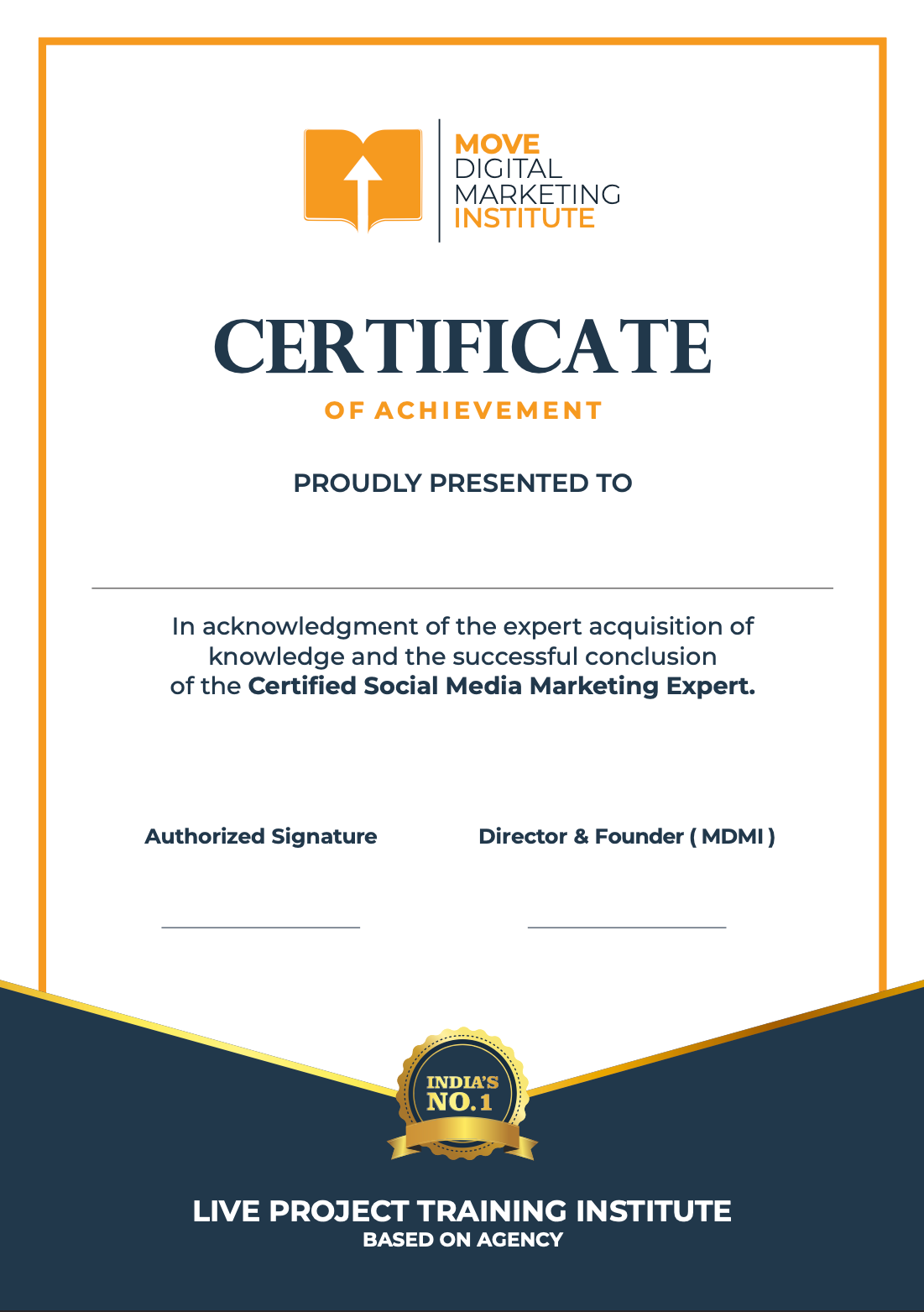
Certified Social Media Marketing Expert -
 View certificate
Certified Content Marketing Strategist -
 View certificate
AI Career Kickstarter Program -
 View certificate
Certified Affiliate & Influencer Marketing Professional -
 View certificate
Certified Google Analytics (GA4) Practitioner -
 View certificate
Certified Digital Marketing Freelancer -
 View certificate
Capstone Project Completion Certificate -
 View certificate
Digital Marketing Excellence Award -
 View certificate
Social Media Marketing Course
Choose your starting pointStart with the work
Start with the work
you want to do.
Your background helps shape your starting point. Use these four perspectives to organise your goals, then revisit the course directions above.
Not sure yet? Try the learning-path finder ↗
01 / Students & career starters
Build a foundation.
Explore Digital Marketer Certification to understand the decisions behind a marketing plan. First task: describe one audience and the question you want to help them answer.
Explore a starting point
02 / People changing careers
Connect your experience.
Bring the strengths you already have. Research and writing might lead towards SEO; visual communication might lead towards social media. First task: compare the everyday work in two roles.
Explore a starting point
03 / Working marketers
Work on a specific gap.
Choose a specialist route around a decision you want to make better: search, content, campaigns or websites. First task: write down one recurring challenge in your current work.
Explore a starting point
04 / Freelancers & business owners
Start with one priority.
A clearer website, a focused campaign or a repeatable AI workflow can be a useful starting point. First task: name the business problem and the output you need.
Explore a starting pointContinue exploringRead around
Read around
your next step.
Explore marketing careers and the work businesses need. Use the articles to develop questions you can bring to your course conversation.

· Published by MDMI
Build a Successful Digital Marketing Career in 2026 at MDMI
The Digital Age Is Full of Opportunities Today, the whole world is running on the […]
Read the article ↗
· Published by MDMI
Why Every Business Needs Digital Marketing in 2026
Introduction: The Business World Has Changed; Are You Ready? Has it ever happened to you […]
Read the article ↗